
Norwalk Projected Release Meaning
Connecticut calls the public field an “estimated release date.” The CT DOC field inventory also lists a maximum release date and special parole date. These dates answer different questions. The estimated date is a current calculation. The maximum date marks the confinement term after applicable calculations, but it may not be the day the person physically leaves. A special parole date signals a later supervision stage.
A person may leave a correctional building before the maximum date for parole, special parole, transitional supervision, a halfway house, or another approved program. The person is released from that facility but may remain under DOC control. A transfer is different. Someone moved from Bridgeport Correctional Center to York, Garner, another state facility, federal custody, or immigration custody has left one location without being released into the community.
| Date or status | What it indicates | What it does not prove |
|---|---|---|
| Estimated release date | DOC’s current projected calculation | That release will occur on that exact day |
| Maximum release date | Current end point for confinement calculation | That no earlier community release applies |
| Special parole date | A post-incarceration supervision marker | Full discharge from the sentence |
| Voted-to-parole date | Release may occur on or after that date | That the person has already left custody |
Check Norwalk Release Date Records
Start with the custody path. Norwalk Police temporary holding is not a long-term county jail. A person released by police may have a promise-to-appear, bond, arrest report, property record, or court docket, but no DOC estimated date. A male committed through Norwalk court may be at Bridgeport Correctional Center. A woman in DOC custody may be at York Correctional Institution, while Garner or another institution can appear after a transfer.
- Use the Norwalk police log or court docket to confirm the person’s full name, case number, and whether a DOC commitment occurred.
- Search the CT DOC Inmate Information Search, preferably by inmate number. Match the date of birth and case facts.
- Read current location, status, maximum release date, estimated release date, special parole date, bond, controlling offense, and detainer fields together.
- Check the official court case for sentence date, jail credit, a sentence modification, bond order, or another case that could affect release.
- If parole is involved, review BOPP information and treat an on-or-after parole date as conditional until DOC reports the change.
- Near the expected date, compare the nightly DOC record with a CT SAVIN notification or direct official confirmation.
For a police-custody release, contact the Norwalk Police Records Unit. For a state sentence, DOC is the record source. Federal release dates belong in the Bureau of Prisons locator, and ICE’s locator addresses current immigration detention. The systems are not interchangeable. The Norwalk release-record search covers that full custody-first routing.
The CT DOC Management Information Systems page documents the public search fields and its nightly feed.
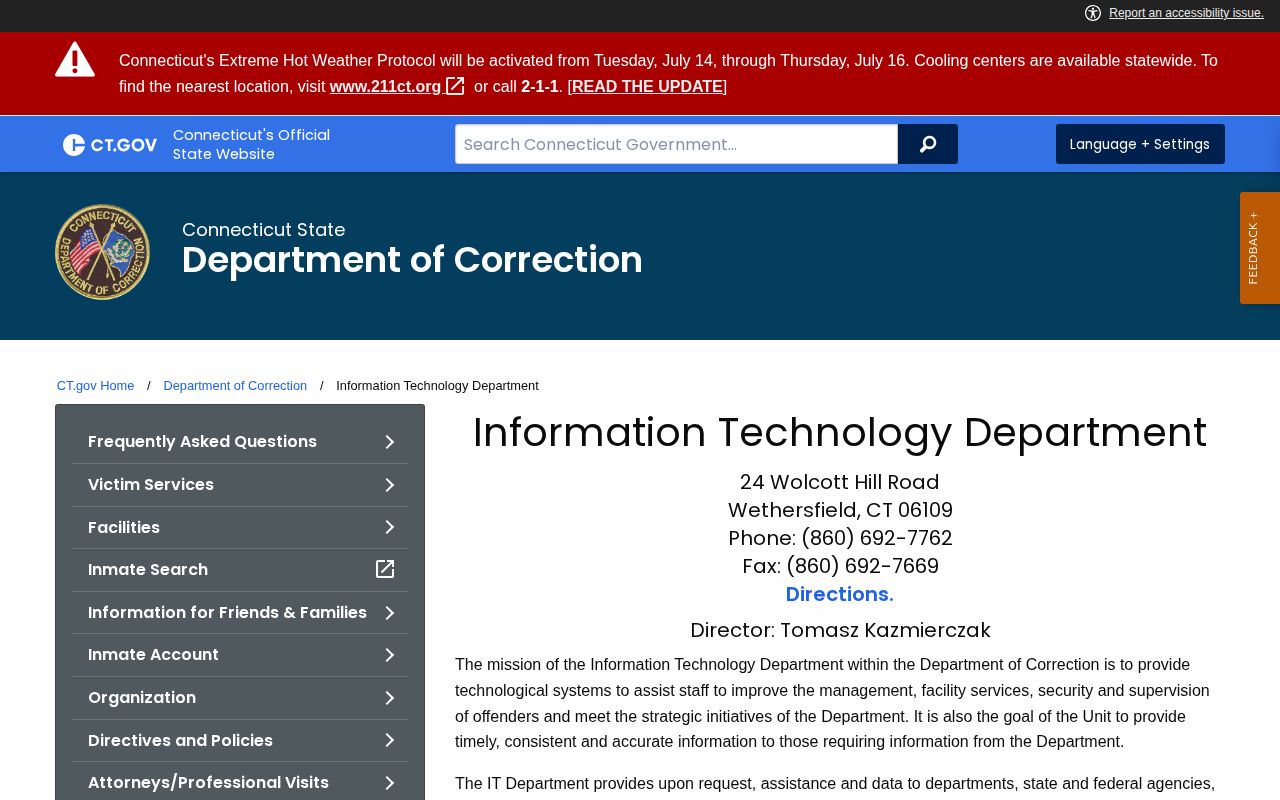
The field inventory is the basis for reading an estimated date alongside status, location, detainers, and supervision markers.
Norwalk Pretrial Release Timing
A pretrial detainee has not yet received a final sentence for the pending case. Release may turn on bond, a promise to appear, a court order, dismissal, nolle, or transfer. A nolle means the prosecutor declined to continue the charge at that point. None of those paths creates the same estimated-date calculation used for a sentenced inmate.
Norwalk’s Daily Logs can identify an arrest event and may supply a case number or court date. They are not a custody roster and do not prove release. The court docket then shows bond changes, hearings, disposition, and sentence information. If the person entered DOC pretrial custody, the DOC locator may show a bond amount, current location, status, and detainer information without a reliable sentenced release date.
A detainer is a request or legal claim from another authority that may keep someone in custody or cause a transfer after the first case would otherwise permit release. Ask which agency placed it and whether it remains active. Do not subtract bond or jail days to invent an exit date.
Note: For a Norwalk pretrial case, a court event or bond change is more useful than a guessed projected release date.
Norwalk Release Credit Calculation
Connecticut’s computation begins with the sentence and lawful credits. Chapter 325 of the Connecticut statutes includes presentence confinement credit in Section 18-98d and earned risk reduction credit in Section 18-98e. DOC applies qualifying credit after sentence. The sentencing record and DOC calculation should both be reviewed when the amount is disputed.
Presentence credit can recognize eligible time spent confined before sentencing. It is not counted twice. Earned risk reduction credit is discretionary and applies only to eligible sentenced people. The law allows up to five days per month based on the accountability plan, programs and activities, conduct, and compliance with institutional rules. Good conduct alone does not create an automatic right to the credit.
DOC may remove earned credit for misconduct, insubordination, refusal to follow a program or rule, or other good cause. Some serious offense categories are excluded. Credit also cannot cut a mandatory minimum term. Therefore, multiplying months by five days is not a sound way to predict a Norwalk release. The person’s controlling sentence, eligibility, actual awards, losses, and other cases all matter.
- Presentence credit
- Eligible custody time before sentence that DOC applies under statutory rules.
- Earned risk reduction credit
- Discretionary credit for an eligible sentenced person based on the statutory criteria.
- Mandatory minimum
- A required term that qualifying credits cannot reduce below the legal floor.
- Controlling sentence
- The sentence that currently governs the custody calculation.
Norwalk Parole Percentage Rules
Parole eligibility is not the same as a projected discharge date. Connecticut Chapter 961, especially Section 54-125a, sets parole eligibility rules. For certain offenses involving physical force, a person is not eligible for parole until at least 85 percent of the definite sentence has been served. That percentage addresses parole eligibility, not every way a sentence can end.
Other eligible people may receive suitability consideration after 75 percent of a definite or total effective sentence, less applicable risk reduction credit, under the Board’s standards. A hearing is not automatic release. The Board considers whether there is a reasonable probability the person can remain at liberty without violating the law and whether community supervision offers enough benefit compared with continued confinement.
For a definite sentence of two years or less, Section 18-100c supplies another route. After the required part of the sentence and applicable credits, an eligible person may enter a halfway house, group home, mental health facility, or another approved community correction program. Physical presence outside a prison can therefore coexist with continuing DOC control.
The BOPP parole FAQ says a voted-to-parole date means on or after. Field staff coordinate pickup or transportation as that date nears. A grant may still be modified or rescinded before release, so the Board decision must be paired with DOC status.
Why Norwalk Release Dates Change
An estimated date can move in either direction as the official inputs change. Some updates come from DOC, others from a court, BOPP, or another custody agency. The source of the change indicates which record should be checked next.
| Factor | Possible effect | Verification source |
|---|---|---|
| Presentence credit revision | Changes credited days | Court sentence and DOC calculation |
| Credit earned or removed | Moves the estimated date | DOC record or response |
| New charge or court order | Adds custody or alters the sentence | Judicial Branch docket |
| Detainer | Delays release or sends the person elsewhere | DOC field and issuing agency |
| Parole grant or denial | Creates, moves, or removes a community-release path | BOPP and DOC |
| Parole rescission | Stops or modifies a planned release | BOPP revocation unit |
| Facility transfer | Changes location, not necessarily release | DOC current location |
A DOC search is populated nightly rather than in real time. A court order entered today and a CT SAVIN event may appear on a different schedule. A mismatch does not by itself show an error. Save the time and source of each check, then contact the agency with the newest controlling action.
Note: A facility name disappearing from one result may signal transfer, release, or a data update, so compare status before drawing a conclusion.
Connecticut Norwalk Date Quirks
Connecticut combines earned-risk-reduction rules with parole-percentage rules. This is the distinctive local computation issue for a Norwalk state case. Section 18-98e permits up to five days of eligible discretionary credit per month, while Section 54-125a sets the 85 percent rule for specified force offenses and a 75 percent suitability path for other eligible sentences.
The figures cannot be merged into one shortcut. Earned credit depends on eligibility and DOC action. Parole percentages define when consideration may occur, not the date a panel will grant release. An estimated release date displayed by CT DOC already reflects the correction system’s current calculation more reliably than arithmetic based on a sentence quoted in a news item or old docket entry.
The successful statutory capture comes from the official correction statutes.
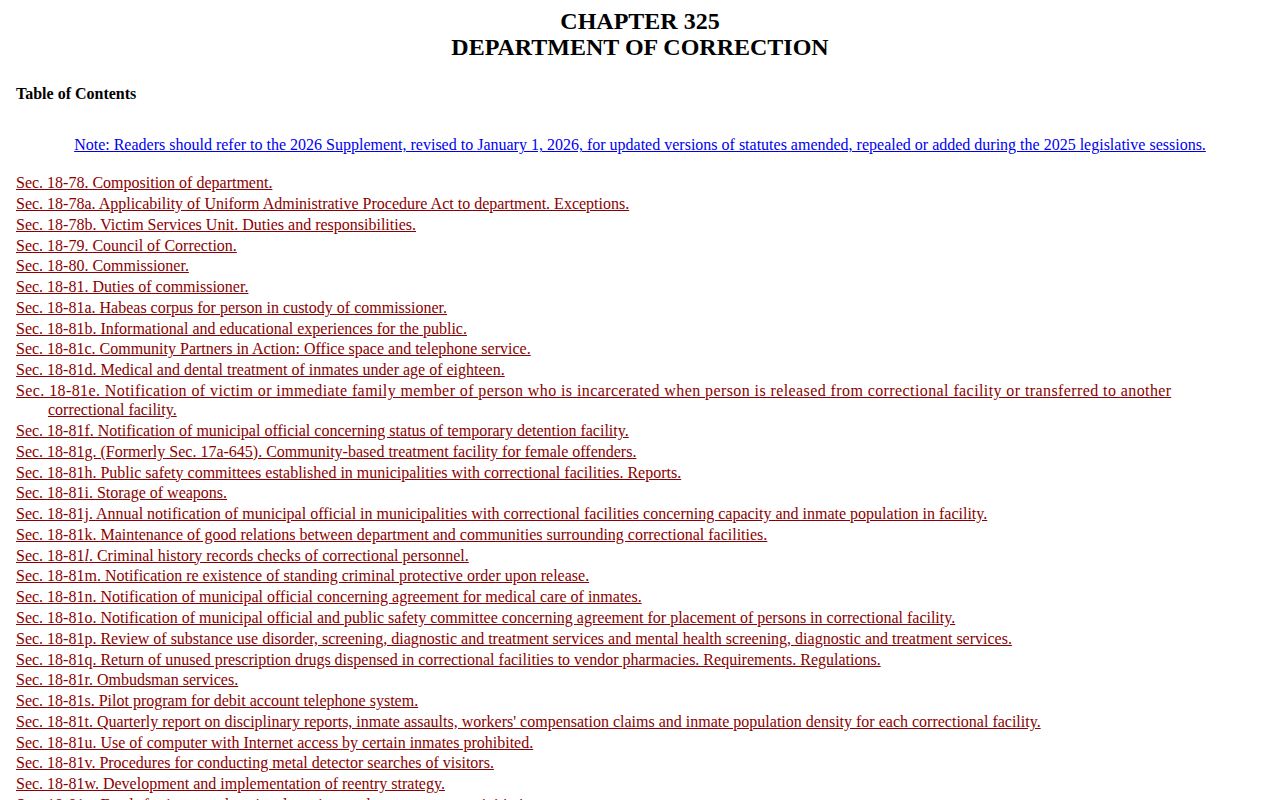
The live statute should be used for current text, while the individual calculation remains a DOC and court-record question.
Confirm Norwalk Actual Release
Recheck close to the expected day. Search DOC for the latest status, compare the court docket for new orders, and look for the applicable parole action. CT SAVIN can send scheduled-release, released-from-prison, released-to-community, or released-to-parole events when the person and registration match.
Custody and court alerts require separate registration. An alert is not a certified release record, and it depends on source-system events. For an official copy, ask DOC, the court clerk, BOPP, or Norwalk Police, depending on which agency controlled the release. The Norwalk VINELink inmate search explains the separate registration paths and PIN confirmation.
CT DOC’s transitional-services material adds practical context. Planning begins at least 45 days before release and may address clothing, transportation, identification, treatment, and aftercare. That work can be underway before the online status changes. It supports preparation, but only the final status and originating record confirm that the person left custody.
Keep the inmate number, docket number, facility, and date of each check. Those details let the correct office explain a late change without relying on a stale estimate.